


Invited to a French Wedding? Here’s What to Expect
This year, two of my own students got married in Dijon. The perfect opportunity to introduce you to the French habits to celebrate weddings!
CULTURE AND FRENCH LIFE[BEGINNERS] ESSENTIAL FRENCH
5/28/20267 min read


From April to June, French weekends tend to disappear into a blur of flower arrangements, long dinners, impossible parking near village churches, and tired guests removing their heels at 3 a.m. Wedding season is in full swing — and this year, two of my own students got married in Dijon. Congratulations to them both! Félicitations à eux 💐 💕 !
One is Thai. The other is American. Both married French partners and suddenly found themselves immersed in the very specific culture of the French wedding (if you're too impatient, get to the photo report right here). One celebration was intimate, the other far more elaborate. But regardless of size, French weddings come with their own codes, expectations, rhythms, and vocabulary — not only for the couple, but also for the guests. I remember perfectly how puzzled was one of my student when the French guests asked her "what is the theme of the wedding, so that we can chose our outfit?" (yes, usually, there are themes).
If you are an expatriate living in France, there is a good chance that one day, you too will receive an elegant invitation card written entirely in French. Let me give you some hints to be better prepared.
The Official Side: In France, the Civil Wedding Comes First
One thing surprises many foreigners: in France, only the civil wedding (le mariage civil) has legal value. A religious ceremony or secular outdoor ceremony can absolutely happen afterwards — but never before the mairie. In fact, French law formally prohibits religious weddings before the civil one (and if you want a religious wedding, you will first have to prove to any religious authority, with an official document, that you have married in the mairie before).


Marrying at the mairie is not much of a romance. It involves paperwork, witnesses (les témoins) - who are mandatory, and administrative delays that can become quite serious in large cities. In Paris or Lyon, booking a civil ceremony may require several months of anticipation. In smaller villages, things move much (much) faster.
For foreign nationals marrying a French citizen, the paperwork can feel overwhelming at first: birth certificates translated by a sworn translator, proof of address, ID documents, and frequently a certificat de coutume and a certificate proving you are legally free to marry. French administration also requires the publication of les bans — an official public notice displayed at the mairie for at least ten days before the wedding.
But this mariage civil can also be a very romantic one. If you have no other ceremony afterwards, the mairie will be very open to flower arrangements, music, speeches, etc. so that you can make this administrative ceremony a more personal one. Don't be shy to ask before! And yes: you can wear a beautiful poofy-wedding dress at the mairie, especially if you have just this one ceremony or if the two ceremonies are hold on the same day. French brides tend to have 2 disctinctive dresses nowadays (a smart one for the mairie, a more sophisticated one for the church) but it is a very recent custom, and it has only sense when the civic is followed by a religious ceremony.
Why French Weddings Last Forever
If you come from a culture where weddings last an afternoon, French weddings may come as a shock.
There are usually several distinct moments. First comes the ceremony itself: sometimes just a 30-minute mairie wedding, sometimes a full afternoon combining mairie and church. Sometimes (that was the case for my own wedding), and more and more often due to logistical reasons, the civil wedding and religious wedding even happen on separate days — provided the civil ceremony always comes first.


Then comes the famous and oh-so-expected vin d’honneur. This is one of the most French parts of the day. Around 4 or 5 p.m. (usually just after the ceremony), guests gather for drinks, champagne, and endless trays of petits fours. This moment is larger than the dinner itself: colleagues, neighbours, distant cousins, and family friends are often invited even if they are not staying for the evening reception.
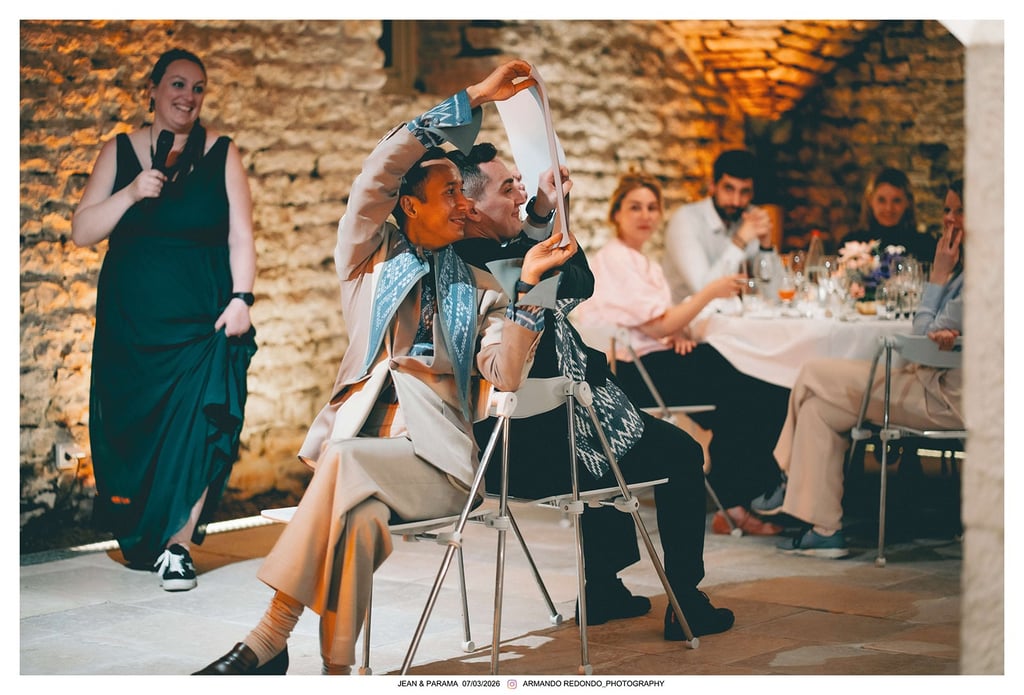
Then comes the dinner. Only "VIPs" stay - I mean, close guests like family and close friends. A wedding is thought small when you have less than 50 people for dinner. It is though big when you have more than 120. (And so, between 50 and 120, it is just a normal French wedding dinner). The dinner generally starts around 8 p.m. and follows a surprisingly stable structure across the country: the entrance of the newlyweds in the dining room, several courses, cheese, dessert — traditionally a pièce montée — and lots of interruptions. French guests love organizing games, childhood photo slideshows, speeches, and surprise animations between courses. The famous ouverture du bal (first dance) often takes place before dessert simply to offer guests the possibility to dance... and stay awake during a meal that can easily last four or five hours.
And then: you dance! Everyone dances, the eldest and the youngest. Not getting up from the table and never dancing at a wedding could even be seen as a sign of disrespect. Having trouble digesting all the wine you’ve had over the past four hours? Then get up—let’s dance! At least two or three dances, before sitting back down for a glass of water (it’s a must). Then, the first guests to leave usually leave around 12:30 or 1:00 a.m. And it is completely normal for the dance floor to stay full until 4 or 5 a.m.
What about the style?
So chic or not so chic? On this point, it’s simple: there are no rules. Or at least, there aren’t any anymore. You can have a wedding that’s as traditional as can be: a big white dress, a procession of children dressed in matching colors, and so on. But with the diversity of couples getting married (second marriages, weddings for seniors, same-sex weddings), wedding styles have also become incredibly diverse. Nowadays, you’ll find brides in short dresses, jeans, even black dresses, or… medieval gowns! Make sure you find out in advance what the style of the wedding you’re invited to will be: chic, traditional, casual, or very unexpected! (And this is when the "what is the theme of the wedding" pops up!)


The Unexpected Things I Ended Up Teaching
This year, my lessons unexpectedly included discussions about wedding shoes, pronunciation coaching for a father-of-the-bride speech over WhatsApp from the United States, and emergency vocabulary about vin d'honneur, noeuds papillons, dragées, and seating charts.
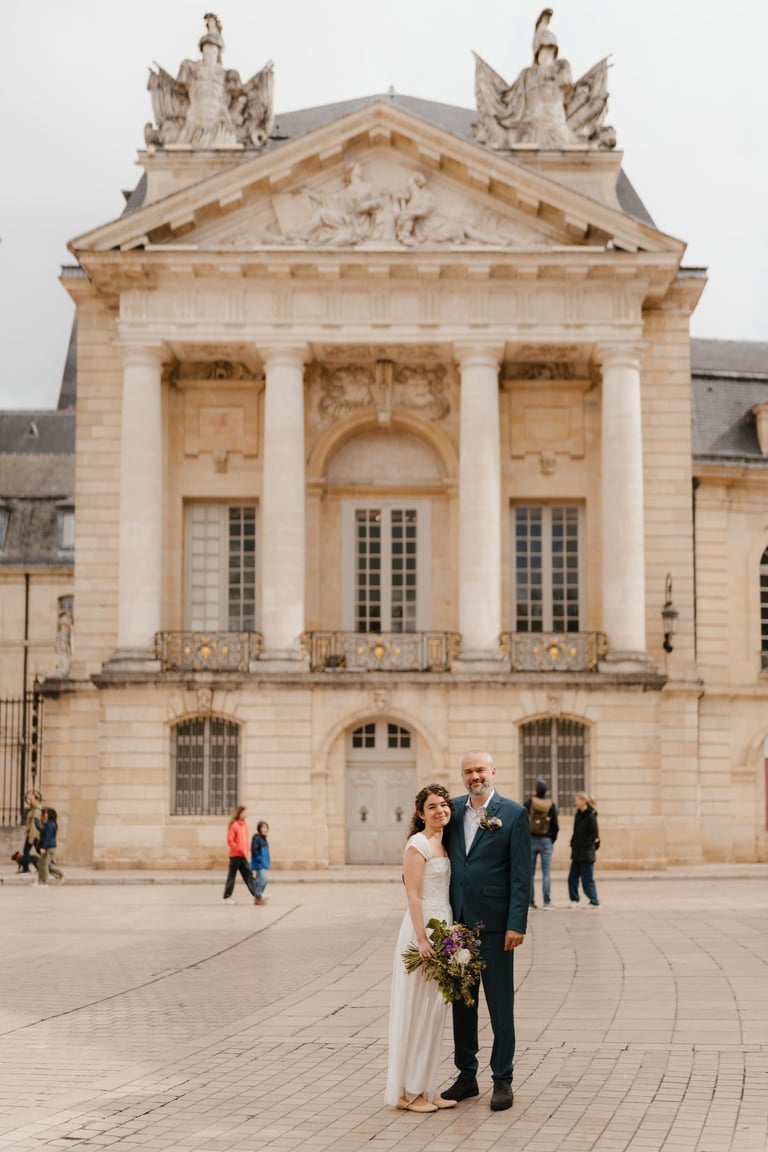
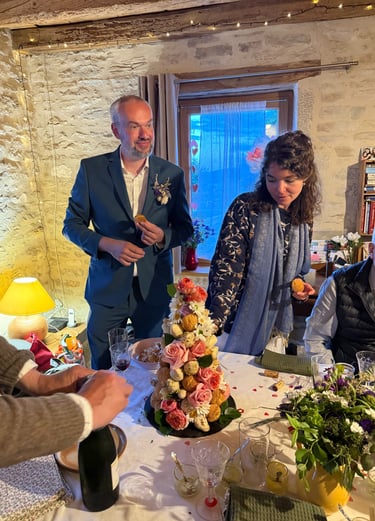
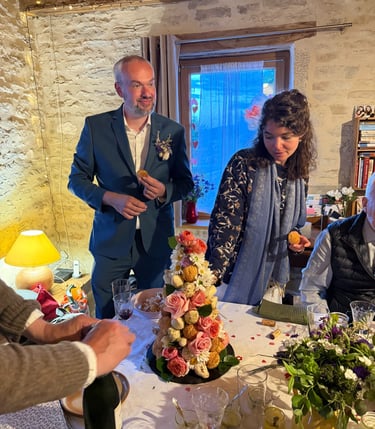
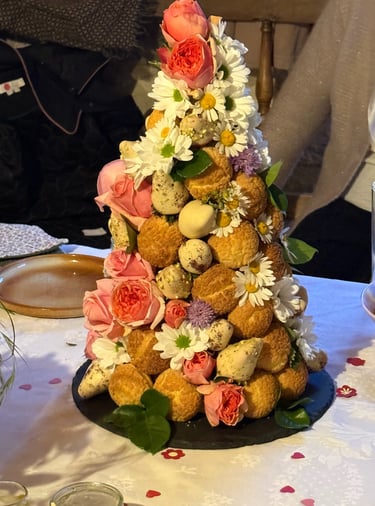
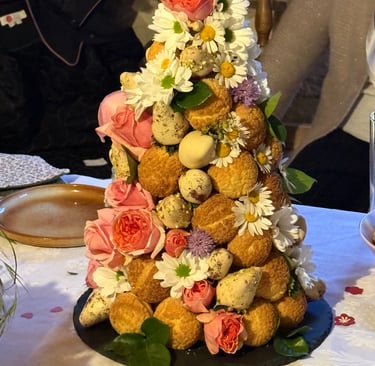
What surprised Emma the most was the wedding cake : well, NOT a wedding cake, une pièce montée, bien sûr !
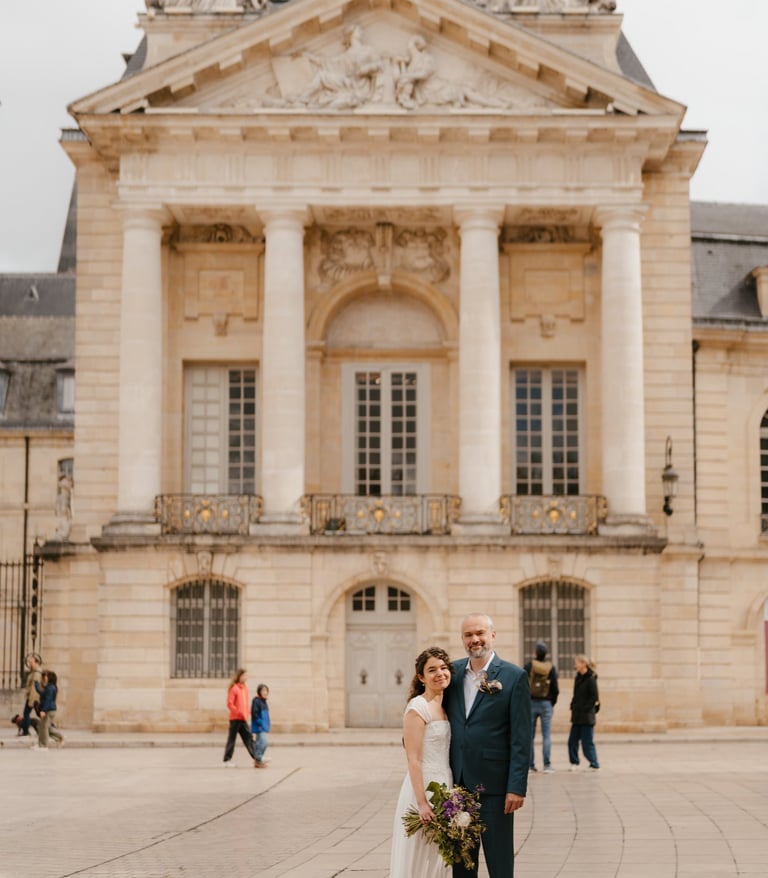
Emma & Elie at Dijon's townhall
The wedding dinner was hold at a restaurant with close family and closest friends.
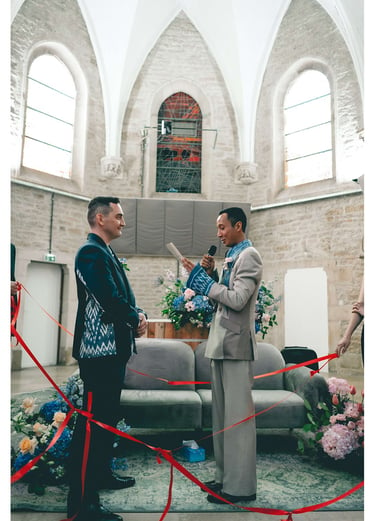
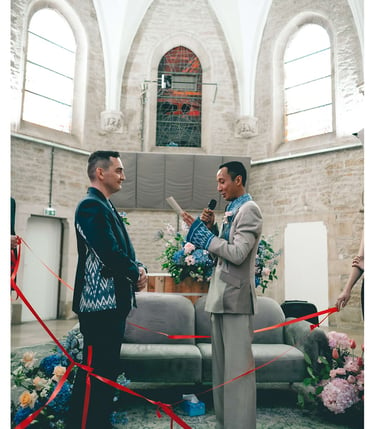
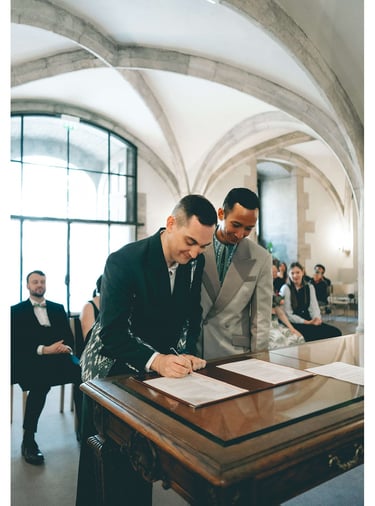
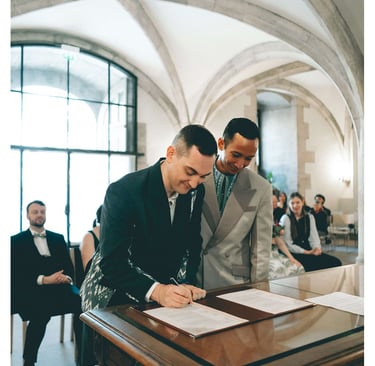
Parama and Jean at Dijon's townhall too, signing the official wedding papers.
Photo by: armandoredondophotography
After the administrative wedding, they had a beautiful secular ceremony in a chapel.
Photo by: armandoredondophotography
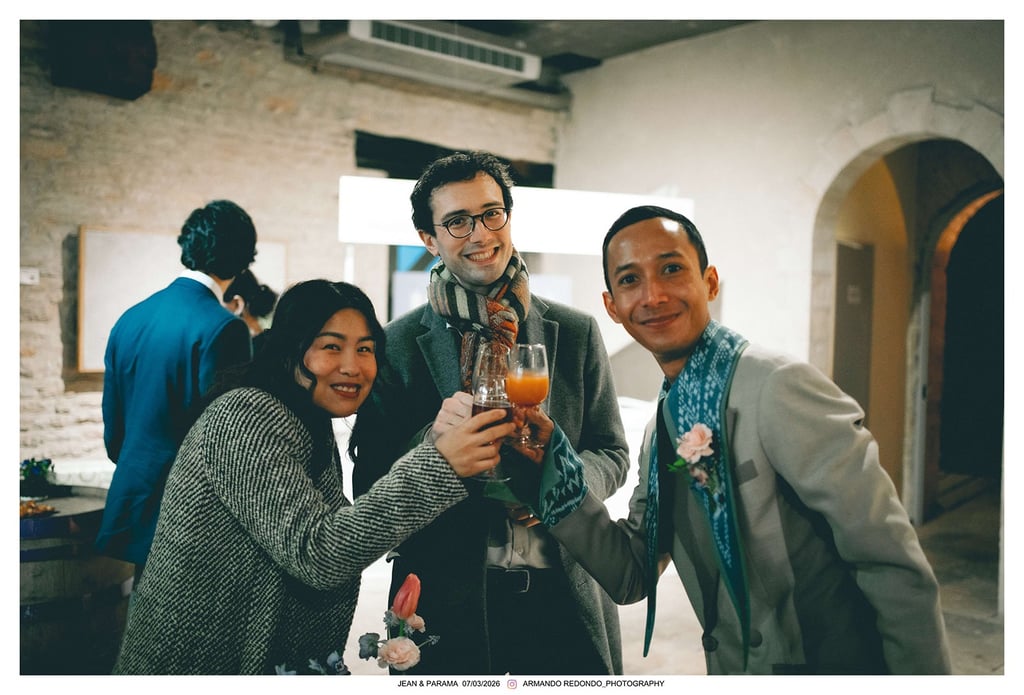
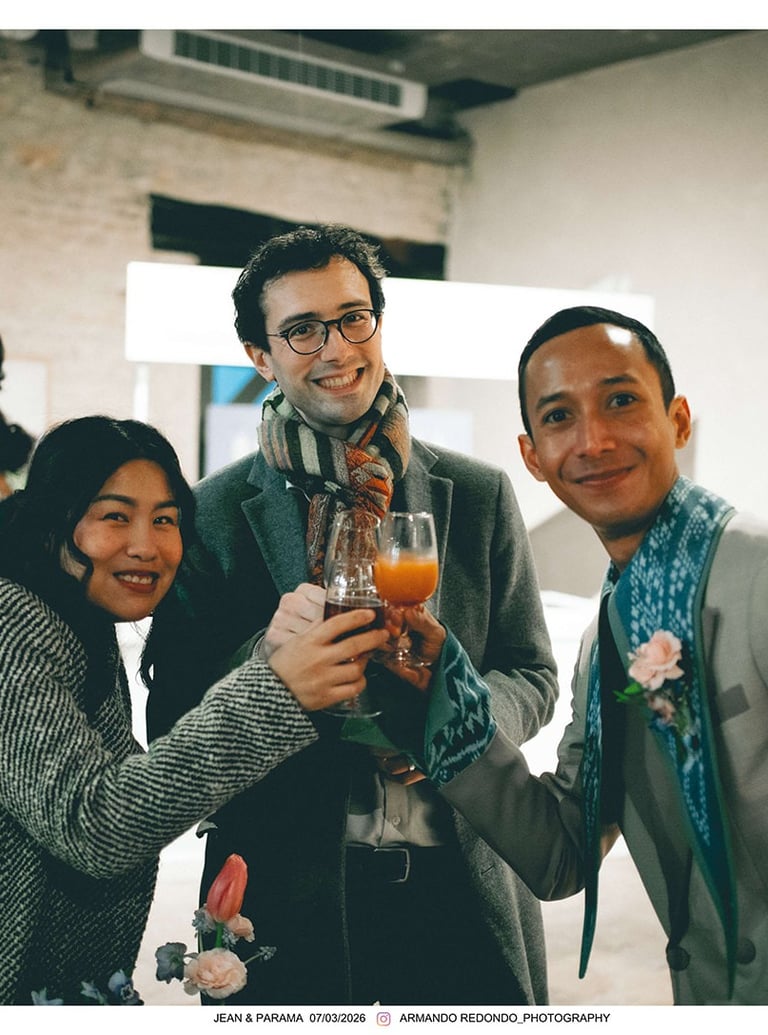
The "vin d'honneur" is often the opoortunity to have pictures with your guests!
Photo by: armandoredondophotography
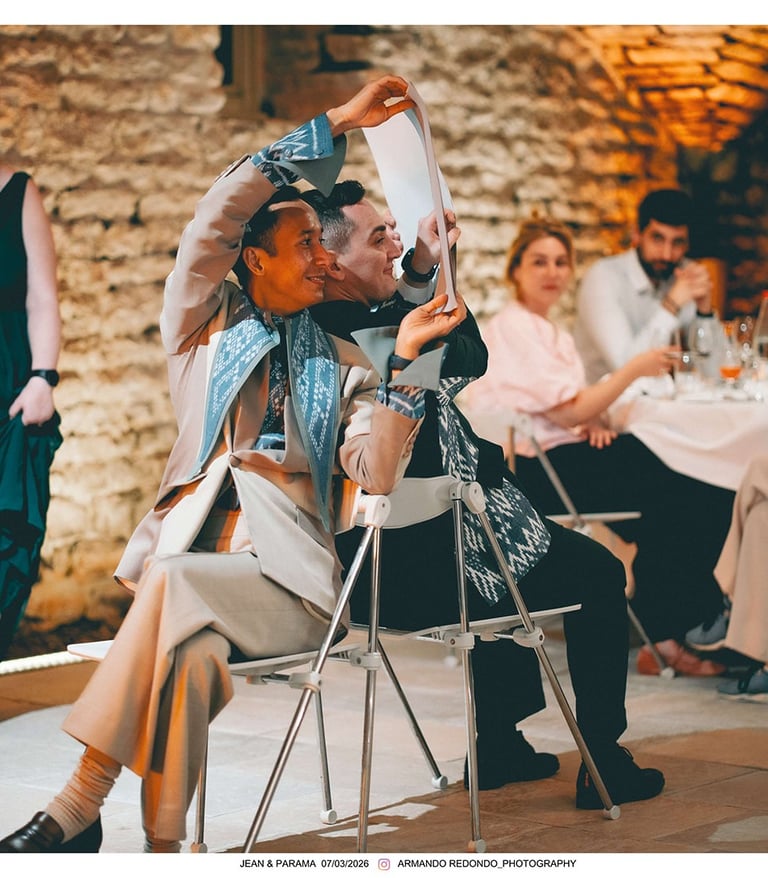
The grooms playing games during a very French wedding dinner.
Photo by: armandoredondophotography
Sometimes our individual lessons drifted away from their original purpose. Here is what my student Emma can say about it:
"We celebrated our marriage with a short ceremony at the mairie de Dijon on May 15 followed by a vin d'honneur and a special lunch in the city with our families. Afterward, we went to the countryside to celebrate for the entire weekend together! Clémence helped me prepare my wedding vows in French, and my husband's vows were in English, honoring the two languages of our relationship."
Relative pronouns could wait one more week. Because talking about your wedding in French also means discovering a culture, understanding social expectations, and learning how to find your place inside an important life event — especially when you are the bride or groom yourself!
Honestly, I was deeply touched to play even a tiny role in these weddings and I would like to once again congratulate my students Parama and Emma on their beautiful weddings. I wish them all the happiness one could wish for a couple, both today and in the future. Always remember what brought you and your spouse together and let you become more and more indispensable to each other every day.
Want to feel more confident in everyday French culture?
If you are preparing for life in France — whether it involves weddings, schools, healthcare, or simply understanding social codes — my lessons are designed precisely for that: practical French rooted in real life. You can discover my online French courses for expatriates here: https://clemenceparis.fr
Also, to help you on your Expat journey:
Check out Struggling to Speak French? Here’s Why (and What to Do About It) for practical tips on speaking French confidently.
Read Essential French School Vocabulary Every Expat Parent Should Know to get your kids integrated and understand the school system.
Don’t forget to download my free vocabulary list of 1,500 useful French words here: 1500 Useful Words in French – Free Download.
Clémence PARIS
Langue et communication
Contact:
© 2024. All rights reserved.
Legal notices
General conditions of sale
Data protection
E.I Clémence Paris Langue et Communication
SIREN 934 245 812
SIRET 93424581200011
TVA INTRACOMMUNAUTAIRE : FR 48934245812