


Daily Life in France: Understanding French Schedules (and the Culture Behind Them)
Daily schedules in France follow recognizable cultural patterns—especially around meals. And I often see how surprising (and sometimes destabilizing) these rhythms can be.
CULTURE AND FRENCH LIFE[BEGINNERS] ESSENTIAL FRENCH
5/1/20265 min read


What time do the French actually eat, work, and go to bed? When one moves to France, one quickly realizes that mastering the language (if that is even possible) is not enough. You also need to understand timing. Daily schedules in France follow recognizable cultural patterns—especially around meals. As a French person who also lived in foreign countries and now works with expatriates, I often see how surprising (and sometimes destabilizing) these rhythms can be. Let me be of some help.
Morning Rhythms and the Structured Lunch Break
In France, the day usually starts between 6:30 and 7:30 a.m. for working adults. School typically begins around 8:30 a.m., depending on the municipality, and adults usually arrive at the office between 8:30 and 9:00 (although I used to arrive earlier as far as I am concerned, at 7:50... which is not unusual, but not common either). In Paris, though, people tend to arrive later on due to long transportation. While in "la Province", a working day is mainly 9am - 5:30 pm, in Paris, it is often delayed to 10am - 6:30 pm.


But the real cultural anchor of the day is le déjeuner. My uncle, who has been living in the USA for more than 40 years, was quite surprised when I replied to him that Yes, "le déjeuner" is still a big thing in France even with the business-life. Indeed: unlike in many countries where lunch can happen anytime between 11:30 a.m. and 2:30 p.m., in France almost everyone eats between 12:00 and 1:30 p.m. This time slot is remarkably consistent across workplaces, schools, and even administrative offices. This is why you may experience some sort of a black-out at lunch time: everyone stops their activity and has a break before continuing their afternoons.
Going on lunch with friends or colleagues is also a nice social event to catch up or to have some breaking time during the day. You may hear "on se fait un déj ?", as a way of saying "shall we organize some lunch together in the near future?" (the full question would be: "on se fait un déjeuner ?", "un déj" being a shortcut for "un déjeuner").
Traditionally, French labor law has long protected a real lunch break (around one hour), and schools organize structured lunch periods in la cantine, when children get served a 4-courses lunch (une entrée, un plat chaud, un produit laitier et un dessert), often cooked with local fresh food.
Key vocab:
se lever – to get up
le petit-déjeuner – breakfast
le déjeuner – lunch
la pause déjeuner – lunch break
la cantine - the school cafeteria
Afternoons, the Goûter, and the Apéro
Children typically finish school at 4:30 p.m. (yes, their day at school is long, as soon as 3 years old!..), 5pm or even 6pm in middle-school or high-school. This is when le goûter takes place—usually between 4:00–5:00 p.m when there is no school that structures the day.
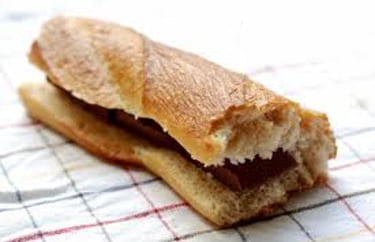
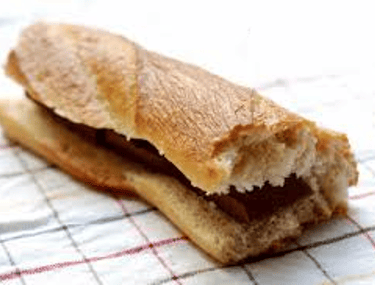
If you have been living in France for some time, you know that le goûter is not just a snack: it is indeed a deeply rooted habit in French childhood culture. Adults sometimes keep this routine (especially when they have children!), but for French kids it is really an institution. A little bit like the English tea-time, although what French kids have is really different. Cookies, fruit, compotes (fruit purées), bread and butter or, even Frenchier, "du pain et du chocolat" which is a bar of chocolate inside a piece of baguette bread (not to be taken for a "pain au chocolat" that you buy at the boulangerie). Du pain et du chocolat : the best of all!
The working day often ends between 5:00 and 6:30 p.m., depending on sector and location. Social life may begin with l’apéro (short for apéritif), typically between 6:30 and 8:00 p.m, especially on Fridays, in the week-ends or during vacations. This pre-dinner drink is a social ritual rather than simply a drink—it marks the transition from work to personal time. Everyone shares the apéro : adults and children as well, who love eating their saucissons and olives and may even enjoy some sirop (which is not like syrup but a concentrated fruit syrup that you mix with water).
Dinner—le dîner or le souper depending on what part of the French-speaking world you are —is generally eaten between 7:30 and 9:00 p.m., slightly more flexible than lunch but still structured compared to many Anglo-Saxon countries. Lighter than lunch, you will only have 2 or 3 courses: a plat principal (easy to cook at the end of the day: some left-overs, pasta, mixed salad fromages et dessert (like yogurts or fruit). On lazy nights, French people enjoy more and more often to have un plateau télé (a TV dinner). But the whole family has it at the same time and choses together a fun program to watch.
And at the end of the day? Well, it's time to go to bed. Children often go to bed between 8:00 and 8:30 p.m., while adults usually between 10:30 and midnight.
Key vocab:
prendre son goûter – to have a 4pm snack
l'apéro – the pre-dinner drink and snacks
le dîner – dinner
un plateau télé - a TV dinner
se coucher - to go to bed
How to Tell the Time in French
To tell the time:
Il est… + hour + heures
quinze or "et quart" (quarter past)
trente or "et demie" (half past)
"moins le quart " (quarter to)
In daily speech, French people commonly use the 24-hour clock in formal contexts (transport schedules, work emails, medical appointments: 18h30, 20h00) and the 12-hour system in friendly or more familiar situations. Il est huit heures (8:00), il est huit heures du soir (8:00 p.m., if clarification of the "pm" is needed), il est vingt heures.
ll est seize heures trente : c'est l'heure du goûter !
Il est dix-neuf heures : c'est l'heure de l'apéro !
Understanding French daily schedules helps you do more than tell time—it helps you anticipate social expectations. Because in France as anywhere else in the world, knowing when things happen is often as important as knowing how to say them.
If you’d like to deepen your practical French (including everyday vocabulary and cultural codes), you can explore my online courses for expatriates here: https://clemenceparis.fr.
Also, to help you on your Expat journey:
Check out Struggling to Speak French? Here’s Why (and What to Do About It) for practical tips on speaking French confidently.
Read Essential French School Vocabulary Every Expat Parent Should Know to get your kids integrated and understand the school system.
Don’t forget to download my free vocabulary list of 1,500 useful French words here: 1500 Useful Words in French – Free Download.
Clémence PARIS
Langue et communication
Contact:
© 2024. All rights reserved.
Legal notices
General conditions of sale
Data protection
E.I Clémence Paris Langue et Communication
SIREN 934 245 812
SIRET 93424581200011
TVA INTRACOMMUNAUTAIRE : FR 48934245812